Growth Strategy
What Brands Lose When They Give Up Market Control
Why pricing visibility, customer data, channel choice, stock clarity, and speed matter for alcohol brands entering new markets.
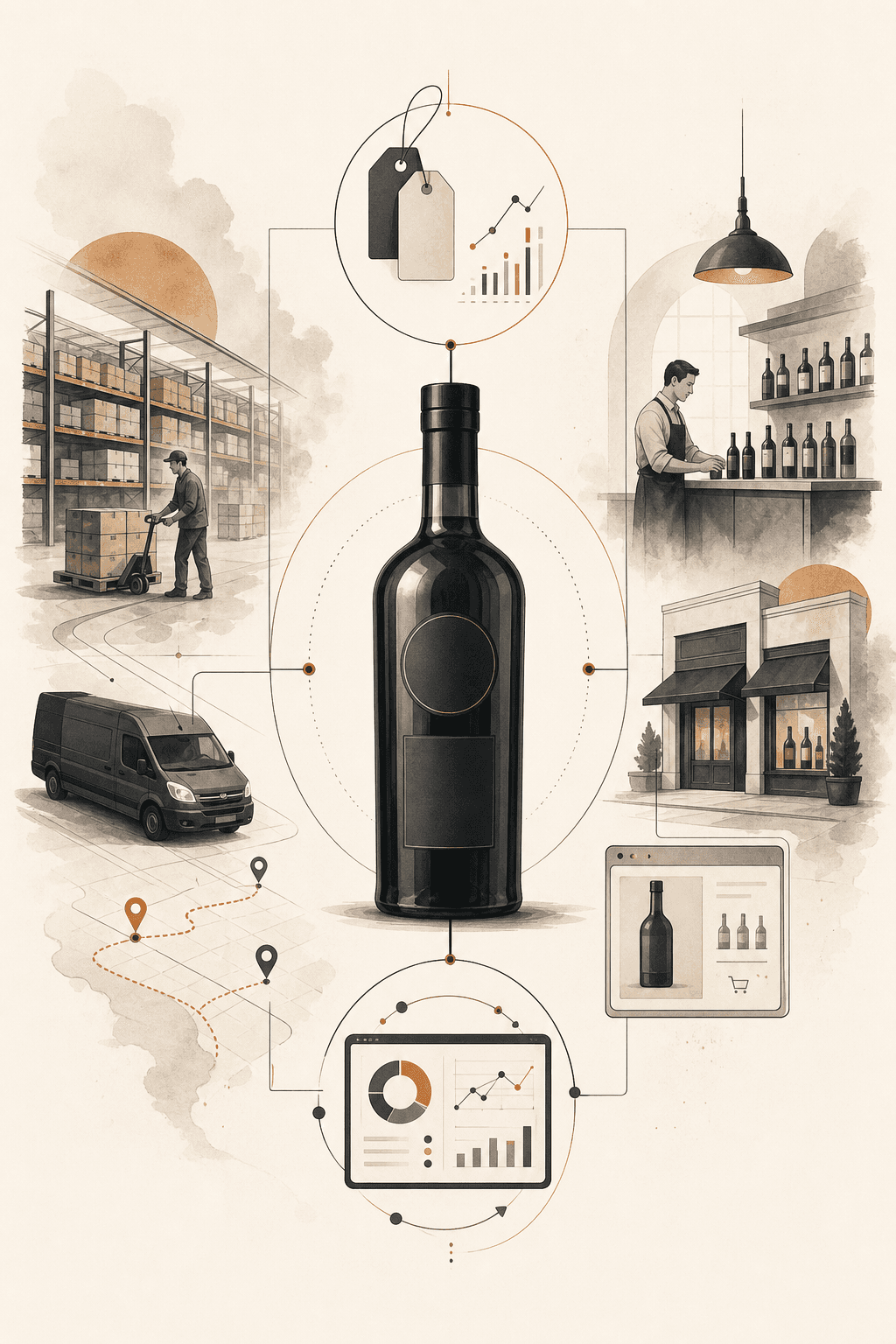
Growth in alcohol rarely fails because a brand lacks ambition. More often, it becomes difficult because the brand loses visibility and flexibility inside its own route to market.
Distribution partners can be valuable. Retailers, importers, wholesalers, fulfilment partners, and agencies all play a role. But when too much of the market sits outside the brand’s view, the brand can lose the information and decision-making power it needs to grow well.
Market control does not mean doing everything alone. It means keeping enough visibility, optionality, and operating power to learn from the market instead of becoming blind inside it.
Pricing power
Pricing is one of the first things brands lose when too many layers sit between them and the customer.
Each layer can change the economics of the brand. Import costs, distributor margins, retailer expectations, promotional pressure, and fulfilment costs all affect how the final price looks in-market.
If the brand cannot see or influence those economics, margin becomes harder to protect and positioning becomes harder to manage. A product that should sit premium can be pulled into the wrong price architecture. A launch that should be tested carefully can become distorted by channel incentives.
Control matters because price is not just an accounting detail. It is part of the brand.
Customer visibility
Every sale should teach the brand something.
Which country responds first? Which channel converts? Which products create repeat demand? Which price points work? Which customers buy once, and which become loyal?
When the brand gives up too much control, those signals can disappear. Sales may happen, but the learning stays with someone else. The brand sees orders after the fact, not demand as it develops.
That makes growth slower and more expensive. Without customer visibility, every new market can feel like starting from zero again.
Channel choice
Alcohol does not move through one simple channel.
A brand may need retail, hospitality, B2B, D2C, samples, gifting, events, special orders, and marketplace listings at different stages of growth. Each route has different economics, requirements, and operational needs.
One partner rarely solves all of that.
If a brand depends too heavily on one route, it can lose the ability to test other channels. That matters because the right channel can change by country, product, customer segment, and stage of market entry.
Flexible infrastructure gives the brand more ways to learn what works.
Stock clarity
Growth becomes difficult when the brand cannot see where product is, what is available, and how quickly it can move.
Stock visibility affects sales, fulfilment, customer service, planning, and cash flow. It also affects confidence. A brand cannot sell well if it does not know whether inventory is in the right place, in the right condition, and available for the right channel.
In alcohol, this is especially important because movement, storage, excise, and release rules can all create friction. Inventory is not just boxes on a shelf. It is regulated commercial potential.
Speed of learning
Markets move quickly. Good brands need to test, react, and adjust.
If every decision depends on a long chain of partners, the brand learns more slowly. New channel ideas take longer to test. Pricing changes take longer to understand. Stock issues take longer to solve. Market feedback arrives late or incomplete.
Speed does not mean rushing. It means shortening the distance between action and learning.
The faster a brand can understand what is happening in-market, the faster it can make better decisions.
The point is not to avoid partners
The answer is not to reject partners or try to own every part of the chain.
Alcohol brands need partners. The question is whether the operating model keeps the brand informed and flexible, or whether it makes the brand dependent and blind.
The strongest route to market gives the brand access, but also control. It lets the brand work with partners while still understanding pricing, customers, stock, channels, and market response.
That is the balance alcohol brands need as they expand: partnership without losing the ability to learn.
Lexir helps brands build that kind of infrastructure.